
10 Questions for Your Farmer (And Our Honest Answers)
- What’s the difference between pasture-raised and forest-raised?
- Honestly, both have advantages and often the same benefits of healthier meat produced. Two key advantages of forest raising pigs: First, there is a larger diversity of forage for the pigs which can add to nutrient content and flavor profile. Second, stress on the pigs is further reduced in this hot climate by providing a high amount of natural shade.
- Do you give your livestock hormones or antibiotics?
- No, never. The way we raise our pigs with larger rotational space and less stressful environments eliminates growth limitations and greatly reduces health risks.
- Can you really trust a USDA facility processing and packaging the meat?
- Yes. In short, meat processing facilities earn their USDA credentials for the way meat is handled and stored and how they maintain cleanliness of their facility. In order to distribute meat for sale, it has to be processed in one of these facilities and stored in specific ways. Ultimately this ensures you get the safest handled product in your freezer.
- What about the bacon?
- Everyone wants bacon, and we get it! Custom processed bacon is typically thicker than traditional store-bought bacon, but one bite in on a fresh BLT and … well … it doesn’t get much better.
- “You are what you eat,” so, what exactly are you feeding your hogs?
- If you saw how these creatures grew, you might ask how in the world do they eat enough! Well, to ensure a balanced diet we have to supplement with non-gmo higher protein foods sourced locally (a healthy mixture of grains like corn, wheat, oat, sunflower, soybeans, etc). This only accounts for half of their total intake…their diet is very diverse and translates to a pork product that is high in Omega 3 fats and a good balance of Omega 3 & 6 fatty acids (the good fats for heart health!).
- Why is buying your pork more expensive than buying it at the grocery store?
- Sadly, mass production typically drives the prices down. Although you’re getting a great deal on price, you’re sacrificing immensely in quality for both the animal and yourself. Because our product is raised with care, in a safe, stable and sustainable environment, the reality is – it just costs more to use local, natural feed, rotationally graze and a high-quality processor.
- What if we aren’t satisfied with our purchase?
- Well, that would be a bummer! We don’t anticipate that being the case, but if so, we’d love a chance to make it right.
- Is there really a difference in the meat?
- Based on our customers’ reviews and repeat orders, that would be a resounding YES. If you were to lay a pack of Oaks & Sons pork chops next to a package from your local grocery store, the color alone would be noticeable. We pride ourselves in the flavor, texture and overall experience of eating Oaks & Sons pork.
- How do your farming practices help the environment?
- This is a great question and could be an entirely separate post. The truth is, animals work with the environment and the environment works with the animals.
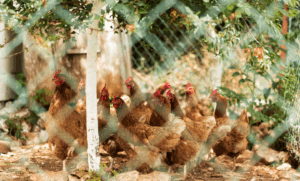
Each animal has a unique purpose on the property. For example, our hogs are natural rooters, and roots about in forests. As the hogs are rooting around, it helps clear out the underbrush while naturally fertilizing. As their noses turn over the soil, seeds that have been buried for years are able to gain access to a necessary environment to grow. Not only that but when they’re moved to the next pasture to root & graze, the ground has a chance to rest while new growth is emerging. This rotational cycle prevents the soil from becoming depleted in nutrients, which creates more growth for the next round of hogs (or cows or goats or chickens!). Similarly, when we allow the chickens to free-range on the property, they tend to gravitate towards manure to spread around (fertilizer), turn over a seasonal garden (naturally preserving the soil integrity), and peck away at pesky pests (praise. The. lord).
- This is a great question and could be an entirely separate post. The truth is, animals work with the environment and the environment works with the animals.
- Do you allow customers to visit?
- We love having visitors! We are raising and homeschooling our four sons that range from 7 years old to 15 years old, which means we’re all over the place! However, give us a call and we’d love to show you around.